
Kei Trucks in Australia: Uses, Registration and What to Know
Kei trucks are small, tough and cheap to run, and they have a growing following in Australia. Here is what they are, what people use them for, and what to check about registration before you buy.
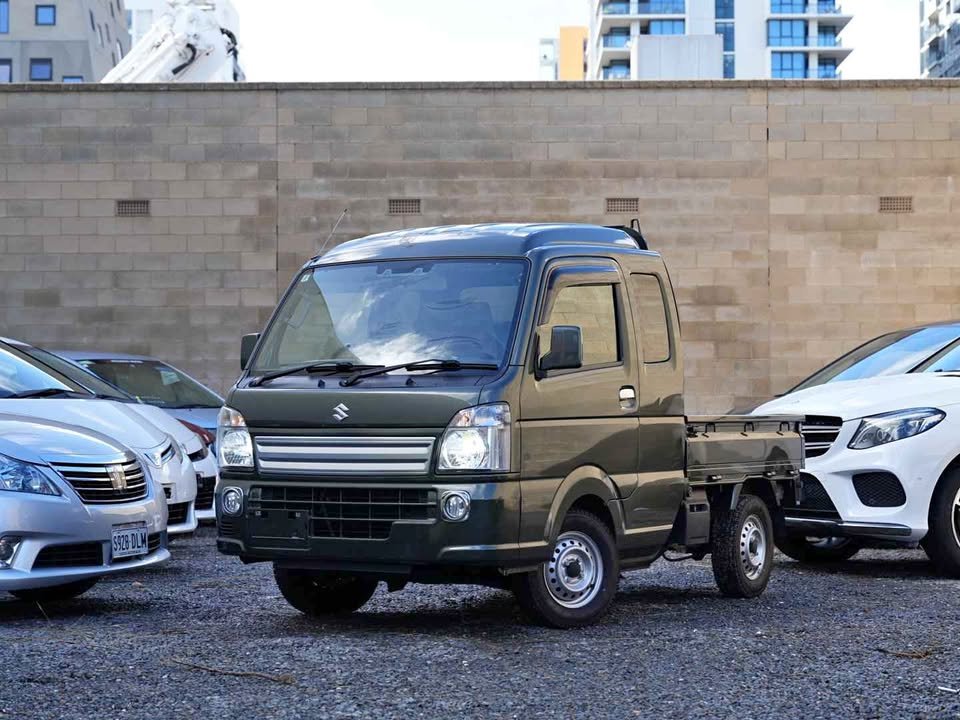
Kei trucks are the tiny workhorses of rural Japan: small enough to fit down a narrow farm track, tough enough to carry a real load, and surprisingly fun to drive. In Australia they’ve found a following with farmers, tradies, property owners and a growing mini-truck enthusiast scene.
What is a kei truck?
“Kei” comes from kei-jidōsha (軽自動車), Japan’s light-vehicle class. To qualify, a vehicle must stay within strict limits on size and engine capacity, and in return owners pay lower taxes and costs in Japan. Kei trucks are the small tray-back versions of this class, such as the Suzuki Carry, Daihatsu Hijet, Honda Acty, Subaru Sambar and Mitsubishi Minicab.
What people use them for
- Farms and properties. Carrying feed, tools, fencing gear and firewood around large blocks.
- Trades and deliveries. A compact tray that parks anywhere and is cheap to run.
- Vineyards and orchards. Narrow enough to move between rows.
- Fun. Some owners simply love them, and modified kei trucks have a strong enthusiast following.
Things that differ between models
| Feature | Why it matters |
|---|---|
| Cab size | Extended-cab versions, such as the Suzuki Super Carry, give much more room for taller drivers and allow the seats to recline. |
| Transmission | Manual gearboxes are common; automatics are easier around town. |
| Two or four-wheel drive | Many have selectable 4WD, and some include low range or a diff lock for rough tracks. |
| Tray features | Look for fold-down sides, tie-down points and tray condition. |
Registration in Australia
This is the most important question to ask before buying. Whether a kei truck can be fully road-registered depends on how it was imported and on the rules in your state. Older vehicles may be imported on age, while newer ones need to be an approved model under the Government’s specialist and enthusiast scheme and meet Australian standards. Some owners use kei trucks only on private property.
Before you buy: ask exactly how the vehicle was imported and whether it is, or can be, registered in South Australia. You can check a vehicle on the Register of Approved Vehicles, and Service SA explains registering an imported vehicle. For the wider process, see our guide to buying a JDM import in Adelaide.
What to check
- Rust. Check the tray, chassis rails and cab floor, especially on older trucks used in snowy areas.
- 4WD engagement. If fitted, make sure 4WD, low range and any diff lock engage properly.
- Gearbox and clutch. Work trucks can have hard lives; a smooth clutch and clean gear changes are good signs.
- Kilometres and history. Compare the odometer with the auction sheet; our auction sheet guide shows you how.
Recently sold: a 2022 Suzuki Super Carry with the extended cab, higher roof and a 350 kg payload.
Want one? See kei trucks for sale in Adelaide and tell us what you need.
More guides
Ready to find the right car?
Browse our collection of Japanese imports, each inspected and prepared in Adelaide, or tell us what you’re looking for and we’ll help you find it in Japan.